GOAL
To demonstrate improved resolution and rapid analysis times achieved for the UPLC separation of aflatoxins M1, G2, G1, B2, and B1, without derivatization, using the ternary mixing capabilities of the ACQUITY UPLC® H-Class System with the Waters Aflatoxin Analysis Kit.
.jpg)
Background
Aflatoxins are a group of mycotoxins produced as metabolites by the fungi Aspergillus Flavus and Aspergillus Parasiticus. They can be found in various foodstuffs such as grains, nuts, spices, and dairy products. There are four naturally occurring aflatoxins: B1, B2, G1, and G2. The third subset, M1, arise as a metabolic by-product when dairy cattle eat B1-contaminated grains. This can result in contaminated dairy products such as milk.
These compounds are toxic and can be carcinogenic to humans and animals. B1 and G1 are the more potent of the four naturally-occurring aflatoxins. Due to their toxicity, government regulatory agencies impose strict limits on aflatoxins in food-stuffs. For this reason, the food industry needs sensitive, accurate, and reproducible analytical methods to measure these compounds. The methods are usually based on reversed-phase HPLC with fluorescence detection. However, since reversed-phase eluents quench the fluorescence of aflatoxins B1 and G1, derivatization is commonly used to enhance the response of these analytes. Typical choices are pre-column derivatization with trifluoroacetic acid (TFA) or post-column derivatization with iodine, electrochemically-generated bromine, or photochemical UV.
These approaches are time consuming and require the purchase of costly post-column reactors, or, in the case of electrochemically-generated bromine, an electrochemical cell. In particular, the use of TFA raises concerns of handling safety by technicians.
The SOLUTION
Samples were prepared using the Waters Aflatoxin Analysis Kit featuring the VICAM AflaTest® P methodology prior to analysis. Using the ACQUITY UPLC H-Class System with its UPLC®-optimized fluorescence (FLR) Detector, a baseline separation of aflatoxins M1, G2, G1, B2, and B1 was achieved with a run time of 4.5 minutes. No derivatization was necessary. The ACQUITY UPLC H-Class System features a Quaternary Solvent Manager (QSM) and Auto•Blend™ Technology enabling dynamic, programmable blending of solvents. Here, a simple ternary mixture of water, methanol, and acetonitrile was applied in conjunction with an ACQUITY UPLC BEH C18 Column to perform the separation.
.png)
Source: Waters.com
Đội ngũ chuyên gia của Thăng Long sẵn sàn hỗ trợ bạn lựa chọn giải pháp phù hợp
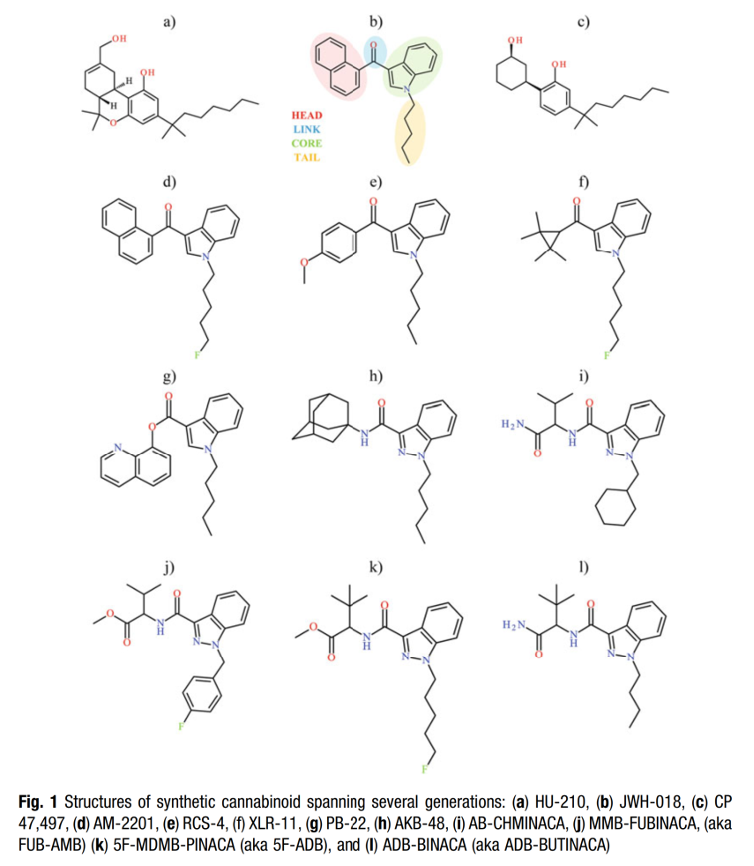
Chương 1: Phân tích Mục tiêu các Cannabinoid Tổng hợp trong Máu và Nước tiểu
Lời giới thiệu: Sau đây là bản tóm tắt lược dịch chương 1 từ cuốn sách: “Methods for Novel Psychoactive Substance Analysis, Methods in Pharmacology and Toxicology, của các biên tập Marta Concheiro và Karl B. Scheidweiler; DOI: https://doi.org/10.1007/978-1-0716-2605-4_1”. Người dịch, TS. Lê Sĩ Hưng, tốt nghiệp tiến sĩ tại đại học BOKU Vienna (Cộng hoà Áo) ngành hoá phân tích, đã có trên 10 năm kinh nghiệm làm việc với các thiết bị khối phổ, tập trung vào ứng dụng các kỹ thuật khối phổ trong phân tích các chất chuyển hoá (metabolites) và protein trong các đối tượng mẫu sinh học, ORCID: 0000-0002-0762-3492. Chương 1 này tập trung vào những thách thức và phương pháp phân tích mục tiêu các cannabinoid tổng hợp (SCs) trong máu và nước tiểu, một lĩnh vực phức tạp do sự đa dạng về cấu trúc hóa học và dược động học của SCs. Khác với các nhóm chất hướng thần mới (NPS) khác, SCs và chất chuyển hóa của chúng có tính chất hóa học biến đổi từ trung tính đến axit và có sự khác biệt giữa mẫu máu và nước tiểu, đòi hỏi các quy trình chiết xuất và phân tích chuyên biệt. LC-MS/MS là phương pháp phân tích mục tiêu phổ biến nhất do độ đặc hiệu, độ nhạy và tính linh hoạt cao, trong khi các phương pháp khác như GC-MS và xét nghiệm miễn dịch ít được sử dụng hơn. Quá trình phân tích bao gồm chuẩn bị mẫu (LLE, SPE hoặc kết tủa protein), định lượng với chất chuẩn, và phân tích dữ liệu sắc ký và khối phổ, trong đó việc hiểu rõ sự phân mảnh của các ion là rất quan trọng. Do đó, phân tích SCs đòi hỏi sự hiểu biết sâu rộng về hóa học, sinh học, và các kỹ thuật phân tích, đồng thời cần liên tục cập nhật kiến thức do sự thay đổi liên tục của các SCs.
Keywords: LC-MS/MS, HRMS, NPS, novel psychoactive substances, suspect screening, multi-targeted screening, wastewater, nước thải, Hàn Quốc.
Giới thiệu: Bài viết này sẽ cung cấp tóm tắt và thông tin lược dịch về việc phân tích và xác định các chất hướng thần mới (NPS) trong các mẫu nước từ 29 nhà máy xử lý nước thải tại Hàn Quốc theo nghiên cứu “Target and suspect screening of (new) psychoactive substances in South Korean wastewater by LC-HRMS, DOI: 10.1016/j.scitotenv.2023.162613”. Về người dịch, TS. Lê Sĩ Hưng, tốt nghiệp tiến sĩ tại đại học BOKU Vienna (Cộng hoà Áo) ngành hoá phân tích, đã có trên 10 năm kinh nghiệm làm việc với các thiết bị khối phổ, tập trung vào ứng dụng các kỹ thuật khối phổ trong phân tích các chất chuyển hoá (metabolites) và protein trong các đối tượng mẫu sinh học, ORCID: 0000-0002-0762-3492.